

.png)
Natural Resources
·
Health
·
Lucas Chap
·
Apr 2026
5
min read


Pagaya is infrastructure, not a consumer brand. It doesn’t issue loans, market to borrowers, or take balance-sheet risk the way traditional fintech lenders do. Instead, Pagaya inserts its AI directly into banks and lending platforms, giving them a smarter second look at applicants they would otherwise reject.
That distinction is everything. By operating behind the scenes, Pagaya avoids competing with its own customers. Banks keep the relationship, regulators stay comfortable, and Pagaya quietly collects fees for improving approval rates without increasing credit risk. It’s fintech that scales with incumbents, not against them.

Pagaya’s advantage compounds over time. Its machine-learning models are trained on billions of data points sourced from a growing network of lending partners. Every new loan improves the system, sharpening underwriting accuracy and expanding the addressable borrower pool.
This creates a classic data flywheel. More partners generate more data, better data improves outcomes, and better outcomes attract more partners. Once integrated, banks don’t churn easily—Pagaya becomes embedded in credit decisioning workflows, turning what looks transactional on the surface into something far stickier underneath.
Pagaya earns a percentage fee on every loan facilitated through its network. That revenue scales directly with volume, not balance-sheet exposure. As loan flow increases, Pagaya benefits without tying up capital or absorbing credit losses the way lenders do.
Crucially, this model has begun translating into real operating leverage. Margins have expanded rapidly as fixed costs spread across a larger base, shifting the company from a growth-at-all-costs narrative toward one focused on profitable growth. This is fintech maturing, not fintech experimenting.
Leadership matters here. Pagaya is not run by growth hackers—it’s run by executives with deep roots in traditional finance. That credibility has helped the company build trust with banks, asset managers, and structured-credit investors who fund the loans Pagaya enables.
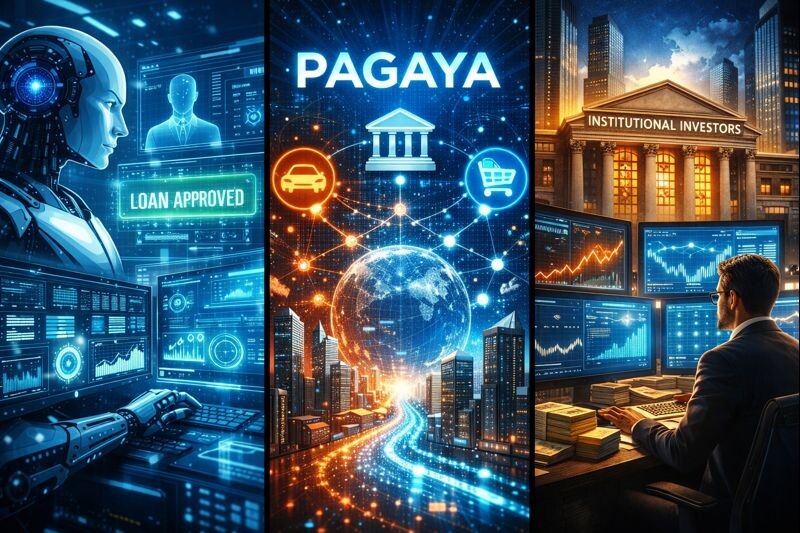
The funding network is as important as the AI itself. Pagaya connects approved borrowers with institutional capital via asset-backed securities and forward-flow agreements, keeping liquidity moving even as market conditions shift. This dual-network structure—banks on one side, institutions on the other—is difficult to replicate.
The broader narrative around Pagaya has evolved. What began as an AI-lending disruptor is increasingly viewed as core infrastructure for consumer credit markets. The company is expanding beyond personal loans into auto finance and point-of-sale lending, widening its footprint without abandoning its core model.
In VHLA terms: this isn’t a flashy app chasing users. It’s a pipes-and-plumbing company quietly upgrading how credit flows through the system. When markets normalize and institutions look for efficiency rather than hype, Pagaya’s role becomes more—not less—relevant.
Disclaimer: This content is for entertainment and educational purposes only and should not be taken as financial advice (NFA). The VHLA crew are storytellers, not your financial advisors — always do your own research, double-check the numbers, and talk to a licensed professional before making any investment decisions.
